01Start with token identity
Two assets can share the same ticker while existing on different networks or at different contract addresses. Confirm the contract, chain, decimals, and whether the asset is native, wrapped, bridged, rebasing, fee-on-transfer, or otherwise nonstandard. A correct ticker is not enough.
02Direct pair or intermediary route?
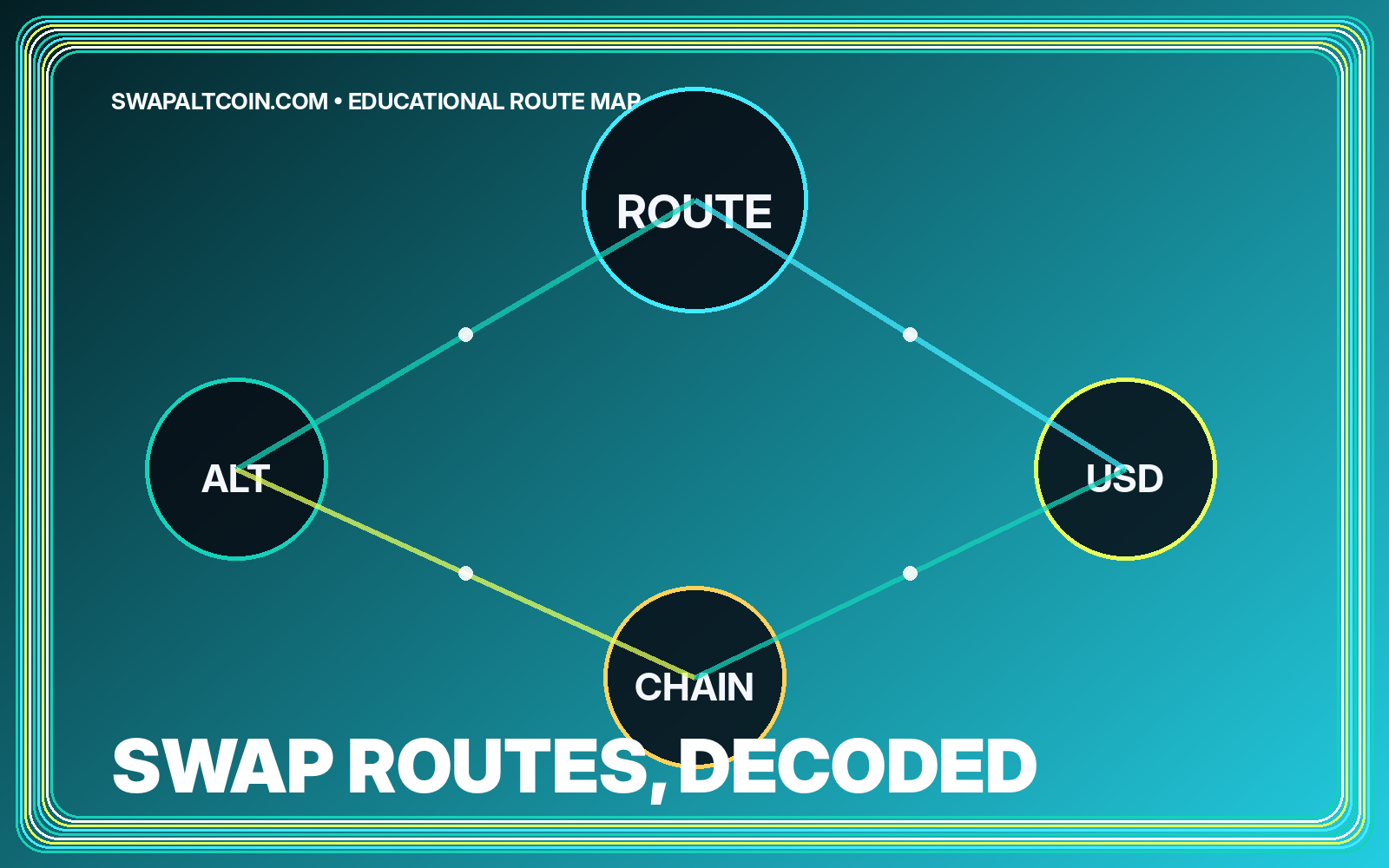
A direct pair may look simpler, but a route through a liquid intermediary can produce a better result. Compare the final output and dependencies. A multi-hop route adds contracts and price movements, while a thin direct pool can create larger price impact.
03Read liquidity and price impact together
Liquidity is route-specific. A token can have a large market capitalization but shallow liquidity in the exact pool, chain, and size you plan to use. Review price impact, minimum received, and whether the quote splits across sources.
04Treat approvals as permissions
On many smart-contract networks, an approval gives a contract permission to spend a token. Review the spender address and amount. An approval is not the swap itself, and an unlimited allowance can remain after the trade unless it is changed or revoked.
05Compare total cost
Include network fees for approval and execution, protocol or liquidity-provider fees, aggregator fees, price impact, token taxes, and any cost of moving the result later. The best route is the one that fits your priorities after all known costs and risks.
06Document the intended result
Before signing, write down the source token, destination token, chain, expected output, minimum received, route, deadline, approval amount, and fallback. This small pause reduces errors caused by similar symbols or a last-second network switch.