Verify the asset
Confirm the network, token contract, decimal format, and destination asset before approving anything.
Security checklist →Swap Altcoin to Stablecoins • Swap Between Altcoins • Cross-Chain Routes
Altcoin swap research, without the noise
SwapAltcoin.com explains how to swap between altcoins, move an altcoin into a stablecoin, evaluate DEX and aggregator routes, and understand cross-chain trade-offs. It is a static educational resource: no wallet connection, custody, or live execution.
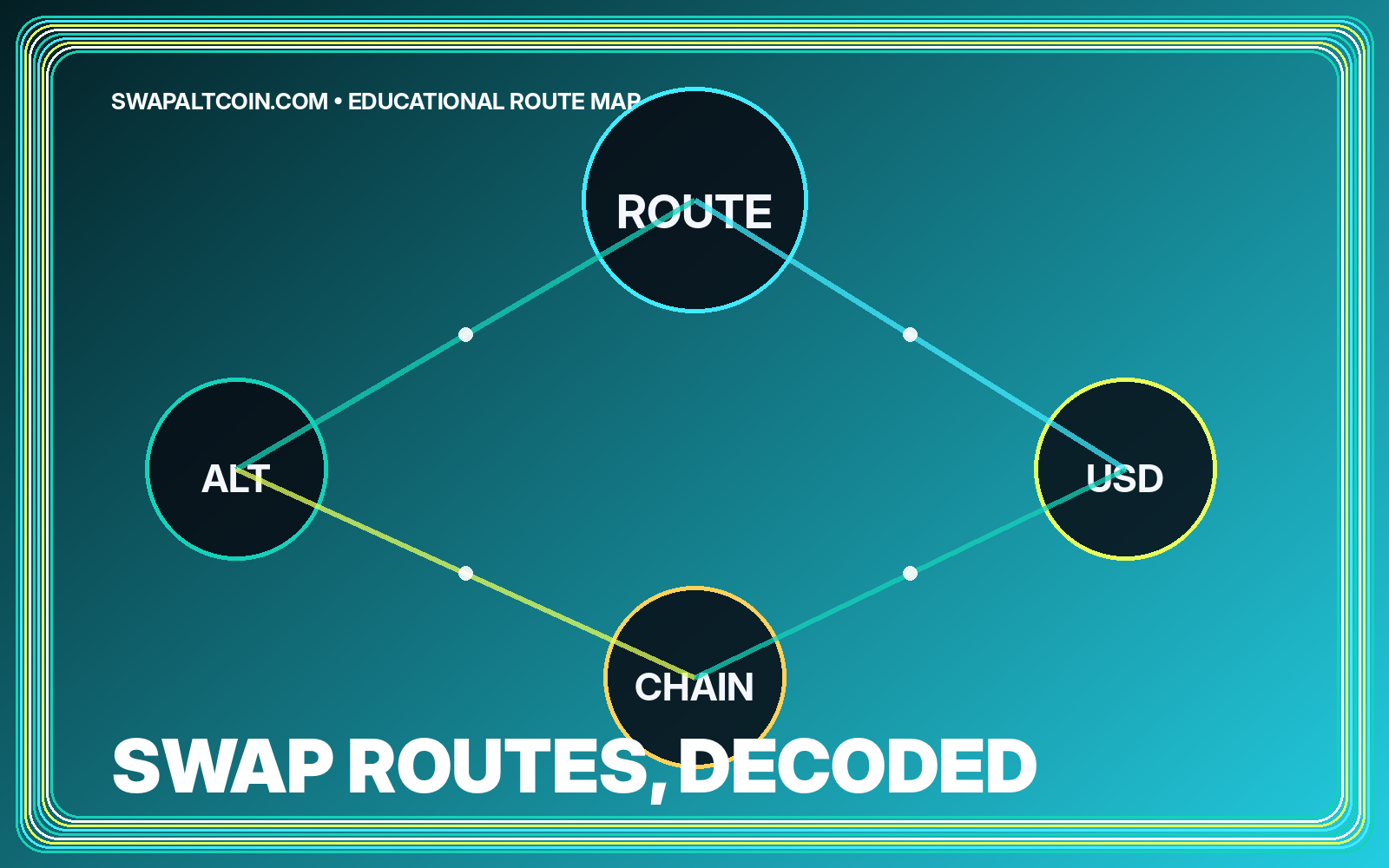
A practical comparison framework
Every route combines asset identity, liquidity, permissions, network conditions, and execution rules. The best-looking headline quote can become a poor outcome after price impact, gas, bridge costs, or a mismatched token contract.
Confirm the network, token contract, decimal format, and destination asset before approving anything.
Security checklist →Note whether the quote uses one pool, multiple pools, an intermediary token, or a cross-chain bridge.
Understand DEX routes →Compare expected output after network fees, liquidity fees, price impact, approvals, and any bridge charge.
Map the fee stack →Know what happens if a transaction fails, a bridge is delayed, a token cannot be sold, or a stablecoin departs from its target.
Review key risks →Core learning paths
Each topic page has a distinct search intent and practical checklist, so users can move from a broad altcoin swap question to the details that actually shape execution.
Compare direct pairs, intermediary routes, token standards, pool depth, and execution constraints.
Open the altcoin swap guide →Choose a destination stablecoin, verify its network version, and compare liquidity and redemption risk.
Open the stablecoin guide →Separate the swap leg from the bridge leg, then assess finality, wrapped assets, and destination gas.
Open the cross-chain guide →Understand liquidity pools, slippage, price impact, approvals, and aggregator routing.
Open the DEX guide →Plan token identifiers, quote lifecycles, allowances, transaction payloads, and monitoring.
Open the developer guide →Use a repeatable pre-signing review for URLs, contract addresses, permissions, networks, and outputs.
Open the safety guide →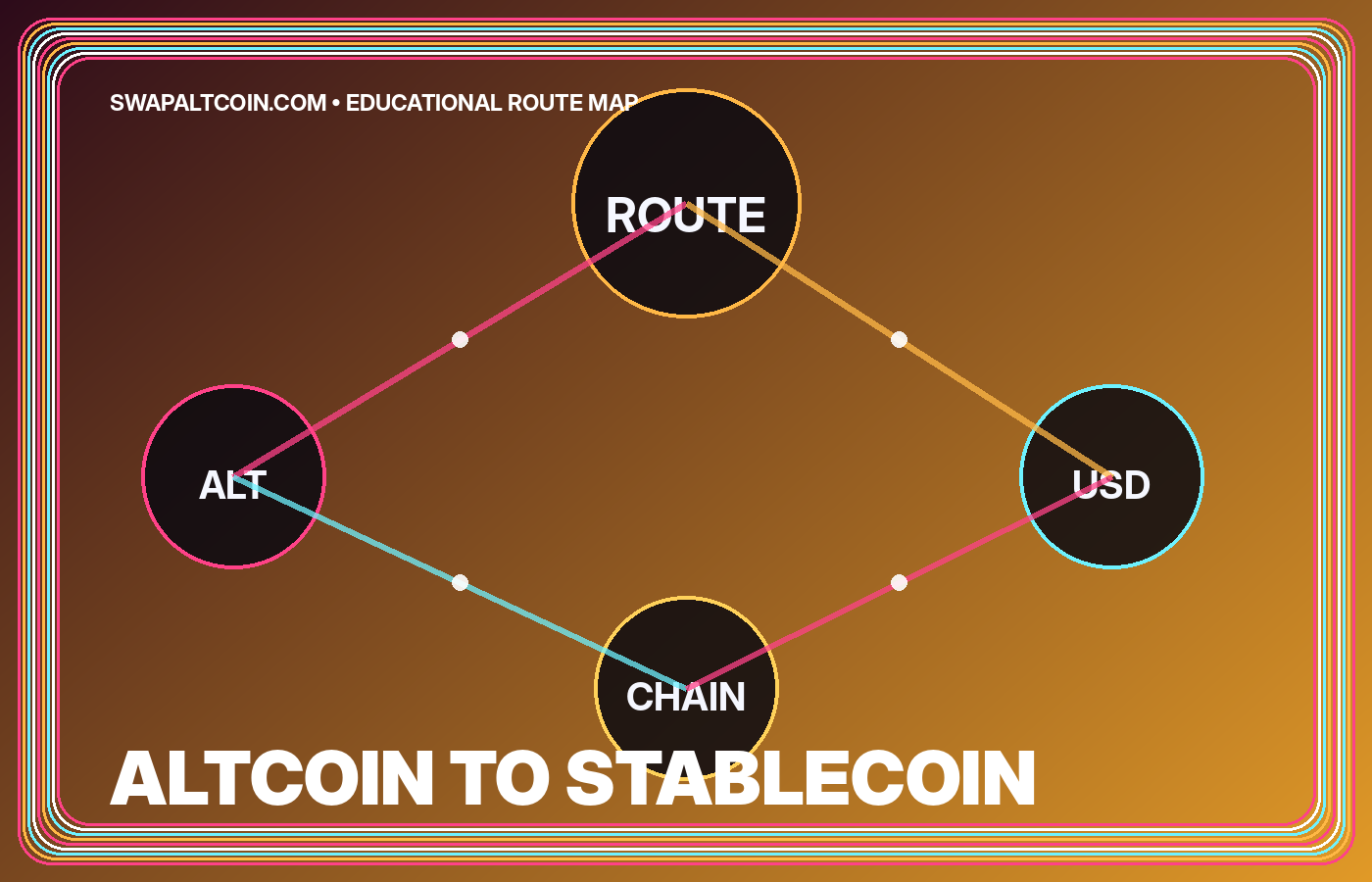
Altcoin to stablecoin
“Stablecoin” is a category, not a single interchangeable asset. A useful comparison starts with the issuer or mechanism, target currency, chain, contract address, liquidity, redemption model, and whether the token is native or bridged.
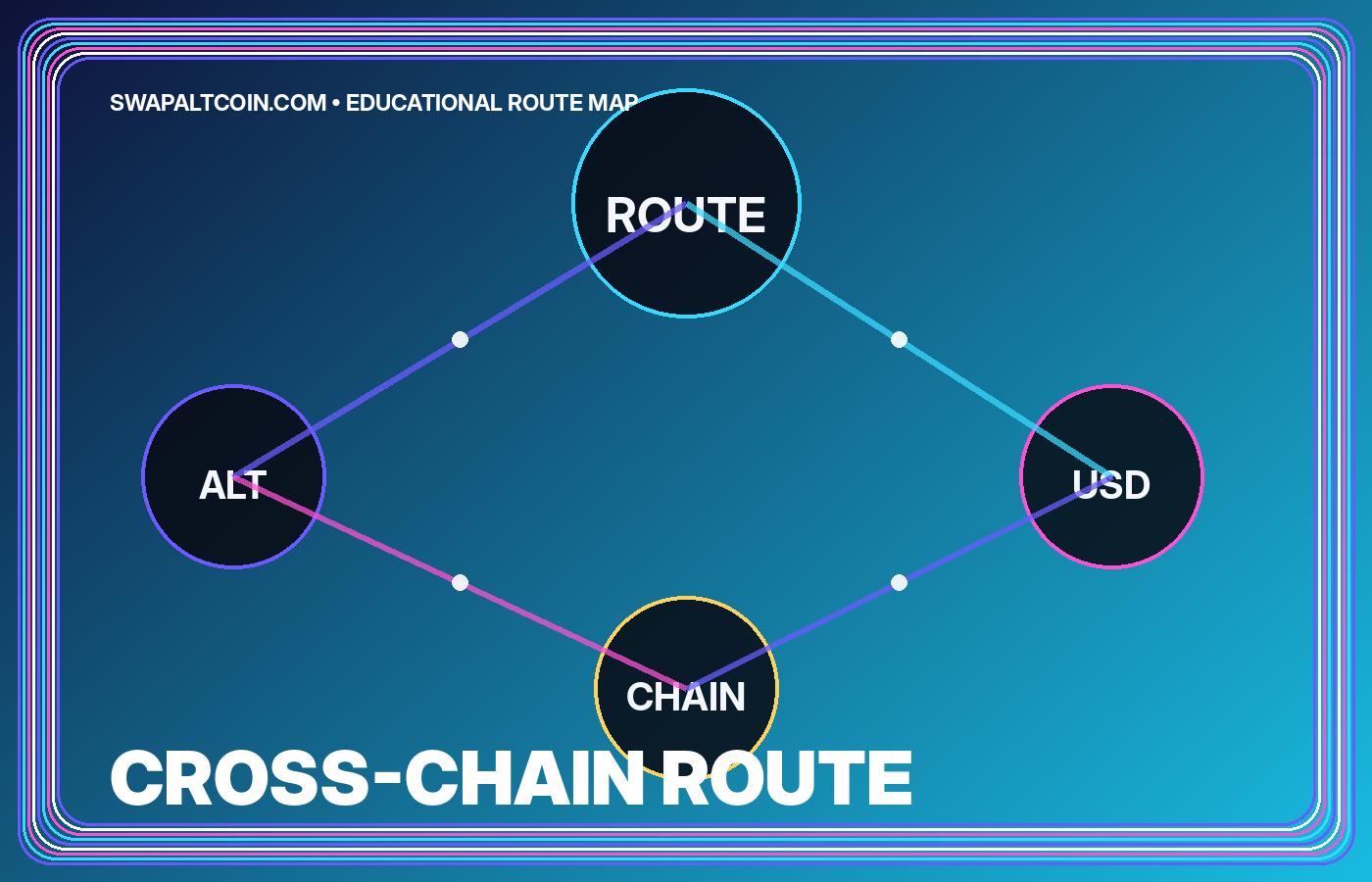
Cross-chain swap anatomy
A cross-chain result can involve a source-chain approval, source swap, bridge message, destination mint or release, and destination swap. Treat each step as a separate dependency, even when the interface presents one confirmation flow.
SwapAltcoin Field Guide
The editorial library focuses on repeatable methods rather than predictions, token promotions, or guaranteed outcomes.
A practical sequence for choosing the stablecoin destination, verifying token identity, comparing routes, and reviewing the result before and after a swap.
Read guide →
A neutral framework for deciding whether a DEX route or centralized exchange workflow better fits a particular altcoin swap.
Read guide →
A route-level explanation of what happens when an altcoin swap crosses networks, including bridge models, destination assets, gas, timing, and failure handling.
Read guide →Frequently asked questions
No. SwapAltcoin.com does not connect wallets, hold assets, provide live quotes, or execute transactions. It provides educational checklists and explanations.
Compare the exact token contract, destination network, route, liquidity, price impact, slippage setting, network and protocol fees, approvals, expected output, and failure behavior.
No. A quote may omit or estimate network costs, depend on fragile liquidity, require broad token approvals, use a bridge, or expose you to a token representation you did not intend to hold.
No. Stablecoins may involve issuer, reserve, redemption, smart-contract, liquidity, bridge, depegging, legal, and regulatory risks. Evaluate the specific asset rather than the label alone.
Approvals and swaps are often separate transactions. A swap can fail because of changed pricing, insufficient gas, expired quotes, slippage limits, insufficient allowance, network congestion, or contract behavior.
Email the SwapAltcoin.com editorial desk. No account or wallet connection is required.